The Heart of a Child and the Heft of an Intellectual

The Multidimensional Multimedia Art of Frederick Abrams
Entertaining friends, colleagues and neighbors with barbecue, salads and a 2-hour movie about the revival of the Cuba-born, Buena Vista Social Club, the details of Frederick Abrams remarkable life and artistic success trickle out in side conversations.
As the evening unfolds, I am drawn into the extraordinary journey of Abrams—his artistic vision, international experiences, and the remarkable events that have shaped his life and work.
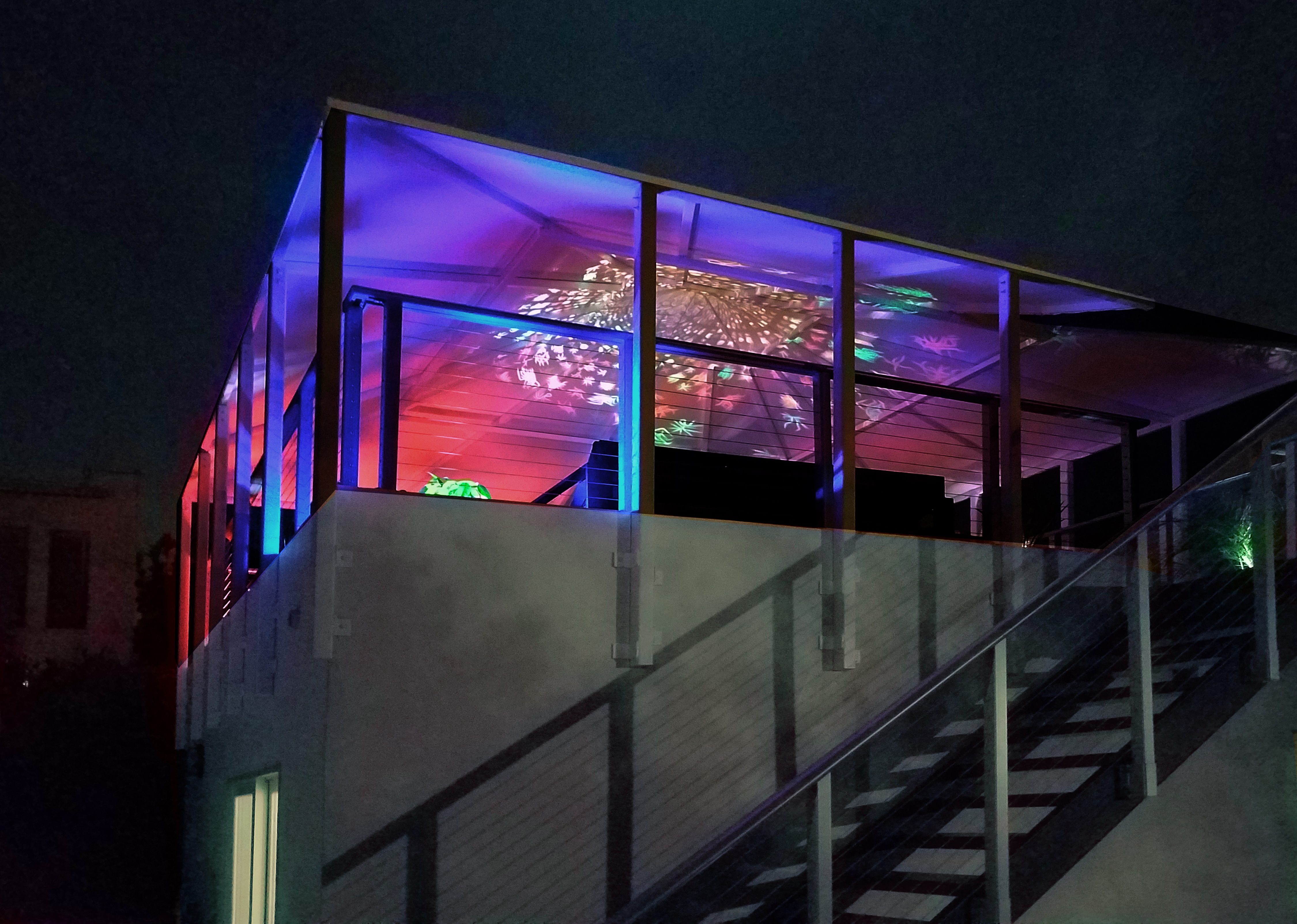
This “Abrams Tower West” was born out of a profound and transformative experience in Poland, during Abrams’ sixteen-year period of living, working, and creating there.
More on this in a minute.
To understand the full story of this exceptional Los Angeles native multimedia artist, we must go back to his youth in this very kitchen where young Frederick watched his world-renowned restaurant-designer/architect father crafting drawings of his ideas night after night after night on the dinner table.
The experience translated into son Frederick attaining the highest overall score for technical drawings in the required industrial design courses he took in middle and secondary school.
“It felt as if an inherited instinct was embedded in my DNA, just as a spider inherently knows how to weave a web,” he recalls with fondness. “With the eyes of a child, they were as meaningful to me as Greek language. However, as an adult I became fascinated by the aesthetic aspects of the technical drawings and what they represented, although without a hint of comprehension of their instructive functional details.”
Years later, Abrams recalls, this early fascination resulted in a lifelong exploration of their various forms, “ranging from zoology to cartography, though from an aesthetic, conceptual, historical and existential perspective.”
Now in his private gallery and all over his house walls are examples of what reviewers and critics have lauded with great enthusiasm.
He has all the skills of a Mozart prodigy in visual capabilities ranging from the refined, right-brain exactness needed by architects, designers and machinists to left-brain, open-ended phantasmagoria more associated with Disney movie animators and theme park imagineers.
Frederick Abrams’ career represents more than five decades of continuous artistic experimentation across stained glass, photography, film, video, music, multimedia installation, architectural design, graphics, and cultural production. Rather than developing within a single medium, Abrams has consistently moved between disciplines, allowing one field to inform another. His work is characterized by an unusual ability to recognize connections between seemingly unrelated systems—light and architecture, maps and the human brain, underground transportation networks and biological structures, music and visual art, history and contemporary events.
Sound hyperbolic and too good to be true? Buckle up people.
Exhibit one: “La Grande Odalisque (The Large Brain)”, now standing in his gallery. During his first visit to Paris in 1979 (when he was 29), Abrams picked up a handheld Paris Metro map that reminded him of something other than a metro system — a schematically diagrammed brain with the points where the metro lines crossed being synaptic junctions and the color-coded transportation routes as “trains of thought.”
Inspired by this imagery and the remarkable stained-glass rose windows of Notre Dame, Chartres and Strasbourg Cathedrals, he returned home to Los Angeles to devote the next 18 months conceiving and creating this massive, free-standing (10 ft X 11 ft) stained glass artwork that turned into the thematic basis of a multi-decade, ever evolving multimedia project – The Underground Cathedral.
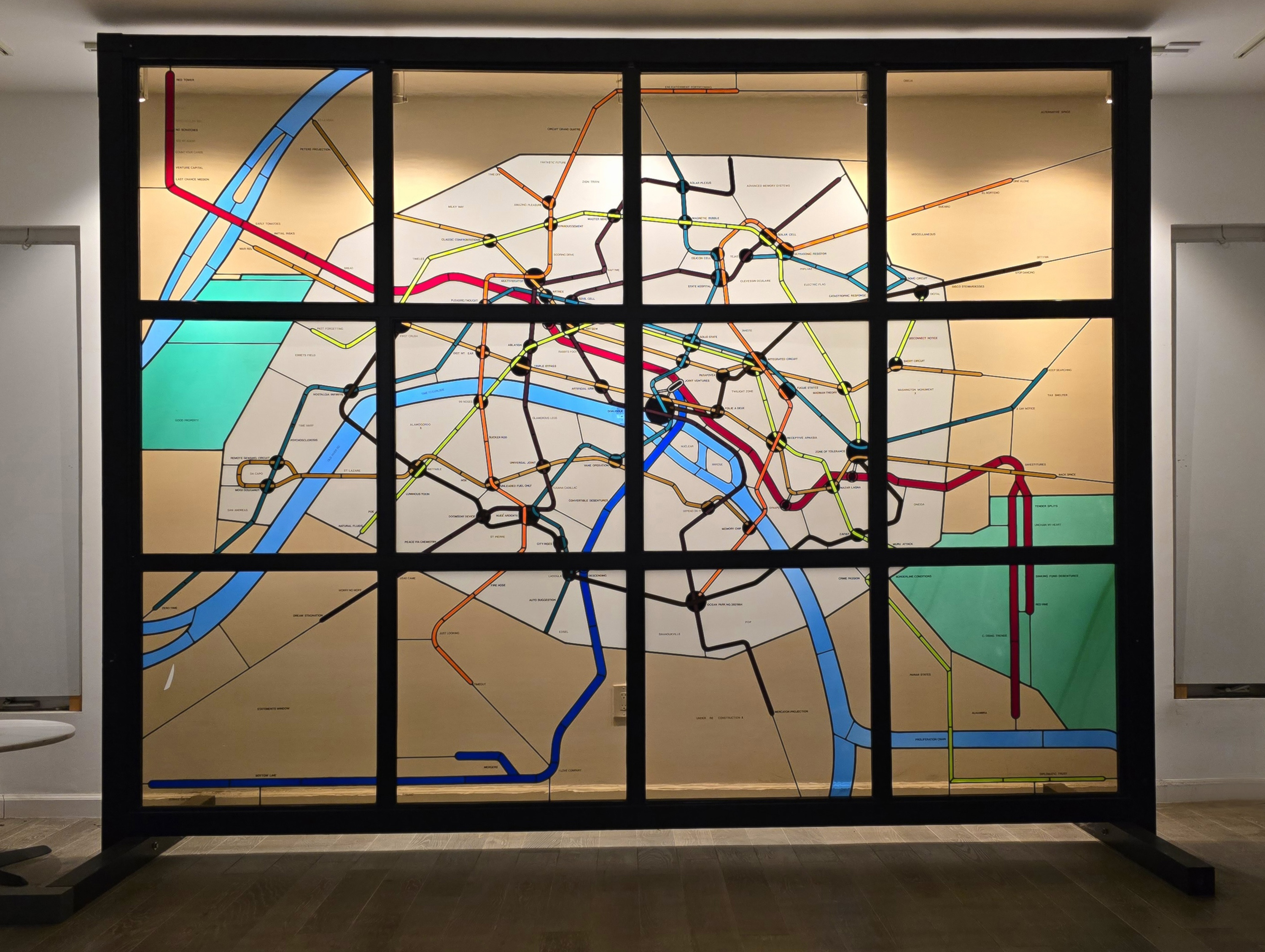
A Parisian friend visited him in L.A., saw the glass artwork being pieced together and said, “Why don’t you change the real names in the map and replace them with words of your own?”
And so he did. New words added to the map turned it into a free association word game involving destiny, choice and fate. One arrives at “Enlightenment Forthcoming” at the highest center point on the map and “Diplomatic Trust,” at the lowest. He is credited with being an early pioneer with this idea.
“Abrams was amongst the first, if not the first artist to recognize the artistic potential of what has more recently been termed ‘map-mashing’ and recognized to be a critical mapping practice,” wrote Samuel Merill, a London based interdisciplinary researcher specializing in cultural and social media conceived in the underground, 2013.
The comments extended into academe:
“….an artist from Los Angeles, Fred Abrams, recently produced a huge stained-glass creation featuring as the main design motif, the diagram of the Paris Metro, and has several other under consideration…..a most interesting cartographic product that goes full circle, from cartographer and artist to public and then back to artist,” wrote Carlos B. Hagen, UCLA, Director of UCLA Map Library (1982)
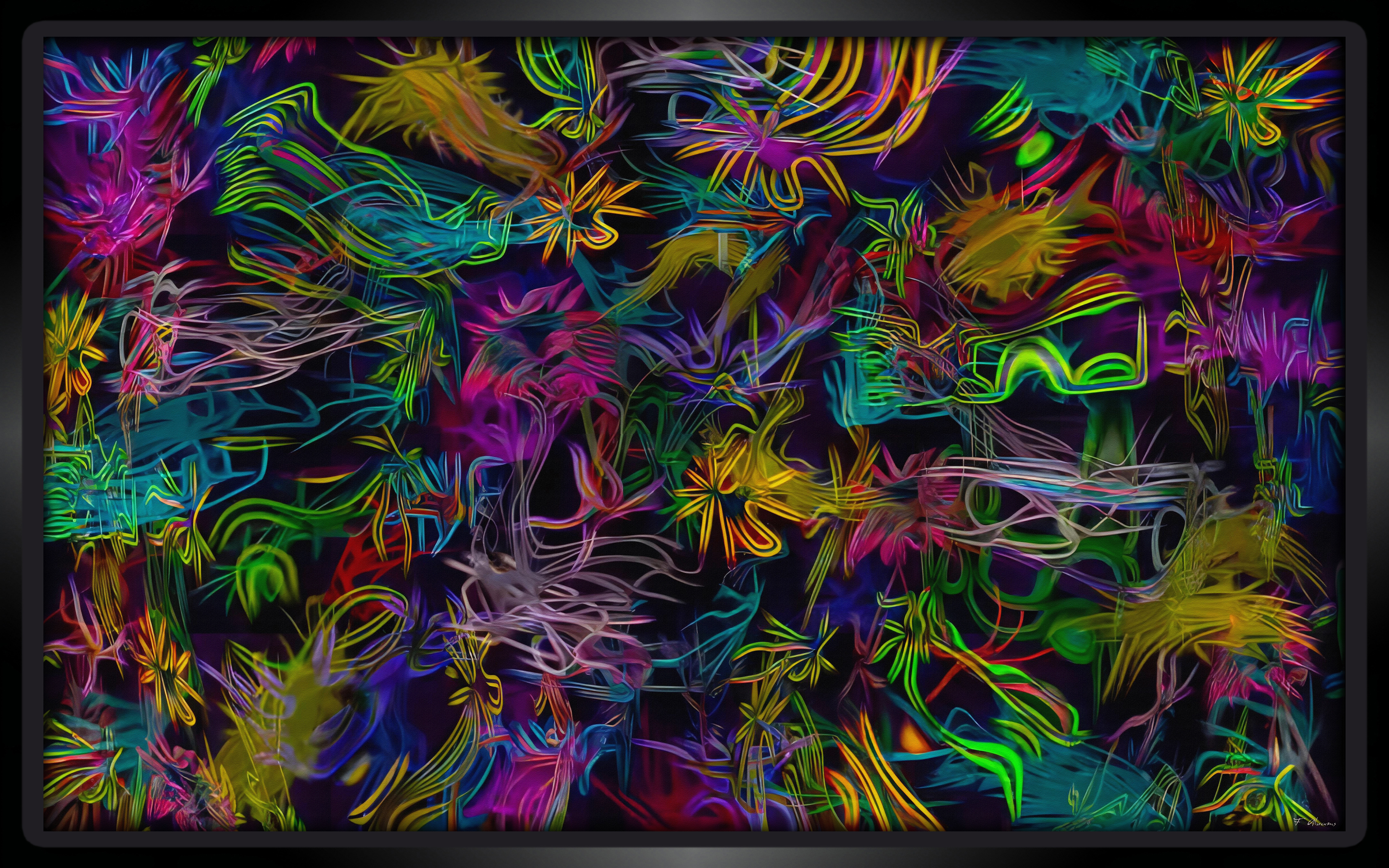
In the artwork’s accompanying glossary, “Trains of Thought,” Abrams quotes Quantum Physicist, Fritjof Capra:
“Human consciousness plays a crucial role in the process of observation, and in atomic physics determines to a large extent the properties of the observed phenomena. The patterns scientists observe in nature are intimately connected with the patterns of their minds, with their concepts, thoughts and values. They may lead us — to put it in extreme terms — to Buddha or to the bomb, and it is up to each of us to decide which path to take.”
A key determining factor in the words Abrams chose was the importance of how humans make choices and process the decisions they make. Since many of his artistic impulses derive from his childhood, he looked at the mapping of words associated with choice, fate and destiny — specifically the childhood board game, “Chutes and Ladders” which itself derived from an ancient board game from Northern India known as “Snakes and Ladders.”
“The game is a potent teaching tool whose simple design has been used for centuries, arguably even millennia, as a way to embody and reinforce religious teachings and cultural values. Along the way, it’s evolved and adapted to incorporate the themes and aesthetics relevant to each culture that played it, from ancient India to Victorian England, to the US and far beyond”. Writes Doug Bierend, a NYC journalist (in his essay “The Timelessness of Snakes and Ladders”)
“Bookending each ladder and snake is a moral lesson,” Abrams says in one article about this work. “In playing, people are also made to experience the course of fate, and the consequences attached to virtues and vices.”
Exhibit Two: “The Routes of the Grand Illusion (The Shooting Star Triptik),” the triptych presents a complex visual interpretation of Los Angeles as a network of movement, transportation, geography, and memory. At its core is a map depicting the city’s major routes and freeway systems; a multi-colored vinyl phonograph record of sounds of the city of Los Angeles symbolizes its downtown, introducing an unexpected reference to music, history, and the city’s cultural center. Throughout the triptych, these major elements are interspersed with historical artifacts of the city’s 20th century film, music and sports industries. Also included are twenty-three subway maps from cities around the world reflecting his native city’s broad multiculturalism. These maps are placed alongside diagrams of Los Angeles’ former railway transit system, as well as additional diagrams depicting cars and engines. As viewers move around the work, the reflections continually alter the appearance of the imagery, making the piece feel less like a static map and more like a living, interconnected system.
“…The system sprawls in all directions – metaphor for our current frame of mind? The current state of affairs? …. The premise that all systems in the world are interrelated and interdependent,” wrote Marga Bijvoet for Artweek in 1986.
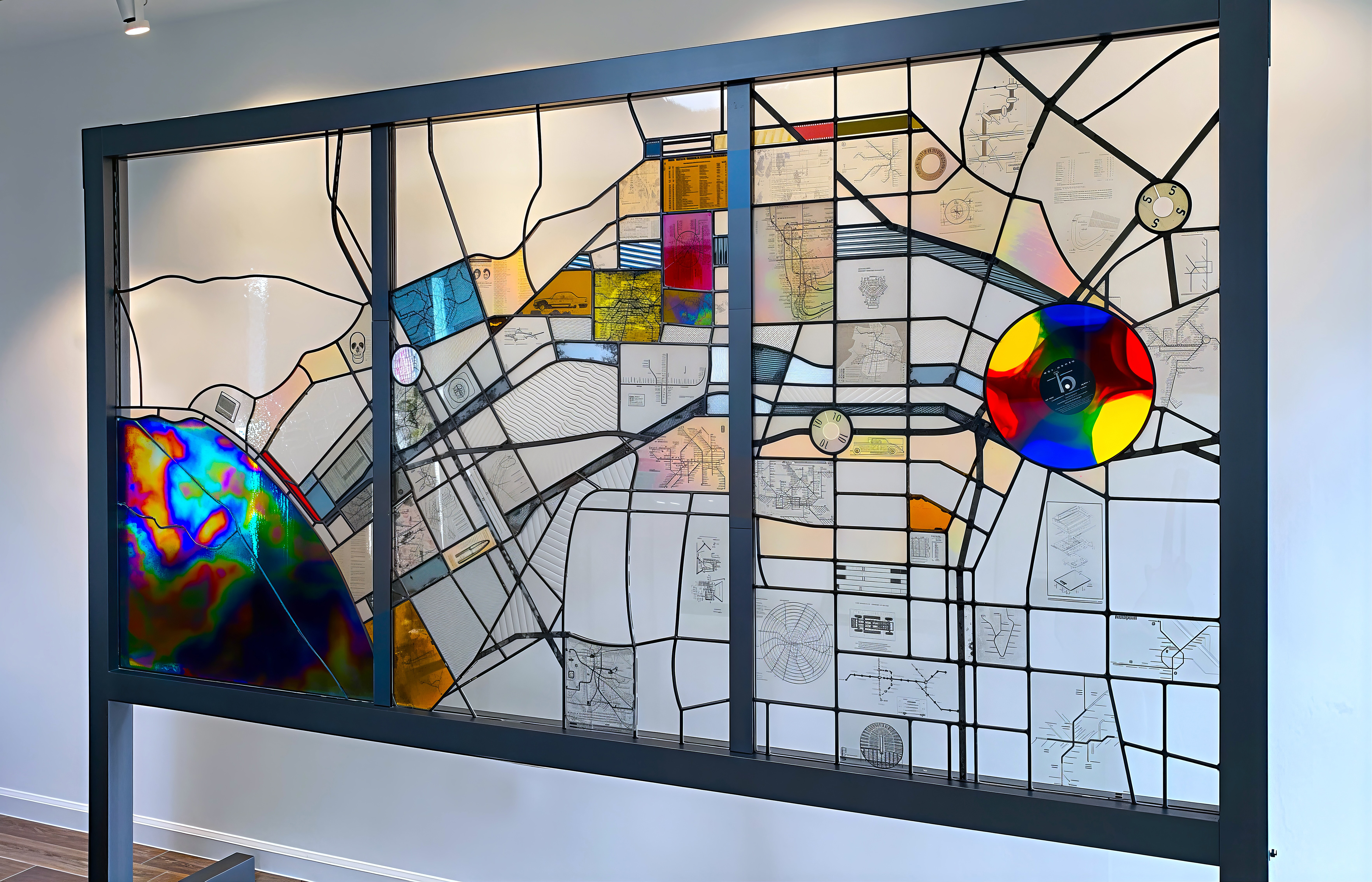
Frederick Abrams takes one on a magical tour from the ancient and modern past to the current state of global affairs via the subways of the world. He uses the Underground as a metaphor for the soul of humanity setting the stage for human connection and cultural blending. Viewers are enamored by the combination of a child’s heart and intellectual heft.
Abrams has traveled extensively for 25 years throughout Europe, finding himself immersed in one profound historical moment after the next: He spent a year in Paris during the period leading up to the 200th anniversary of the French Revolution. He later lived in Barcelona during the period surrounding the 1992 Olympic Games. While there, he created a major permanent stained-glass installation for an international business negotiation center.
He says that everything that happened lead him to spend an unimaginably huge sixteen-year chunk of his life in Poland as “a matter of serendipitous, strange destiny.” A friend introduced him to Jerzy Ryba, the leader of Orange Alternative, an underground group of Polish artists during the years of Martial Law, who was sent to the US for cultural exchange.
They met on April 5, 1989, in a friend’s loft in downtown LA, where his huge stained- glass artwork, “Les routes de La Grande Odalisque (The Large Brain),” was on display. Unknown to either of them, this became a historical day, when what is now known as the “Roundtable Discussions” resulted in allowing Poland to have its first free elections since 1945.
Ryba invited Abrams to visit Poland, an invitation which Abrams accepted.
He says – “In my gut I knew someone above was guiding me, though I had no idea how big this destiny would become!”
Abrams arrived in Poland in the fall of 1989 for a 45-day visit. During his stay, Ryba arranged a 21-day tour across Poland by train. He traveled with 40 of his earliest computer-aided design (CAD) ink drawings, carefully rolled and carried in an architectural drawing tube. These works were exhibited in two Polish cities, Koszalin and Łódź. Three of the drawings were acquired by the Muzeum Sztuki in Łódź, one of Europe’s oldest museums devoted to modern art.
During this trip, Abrams was invited as the first guest of a new weekly show, “Man in Space,” hosted by Zbigniew Makarewicz, who had been recently elected president of the Polish Artists Association. In addition, Abrams was granted escorted access to places closed to the public, providing him with a rare firsthand opportunity to photograph and document restricted underground sites, including the Warsaw Metro while its first line was still under construction. This experience became a pivotal moment in his artistic evolution, as the camera emerged as another tool of creative expression and his exploration of the underground expanded from stained glass and drawings into photography, film, music, and live multimedia performance.
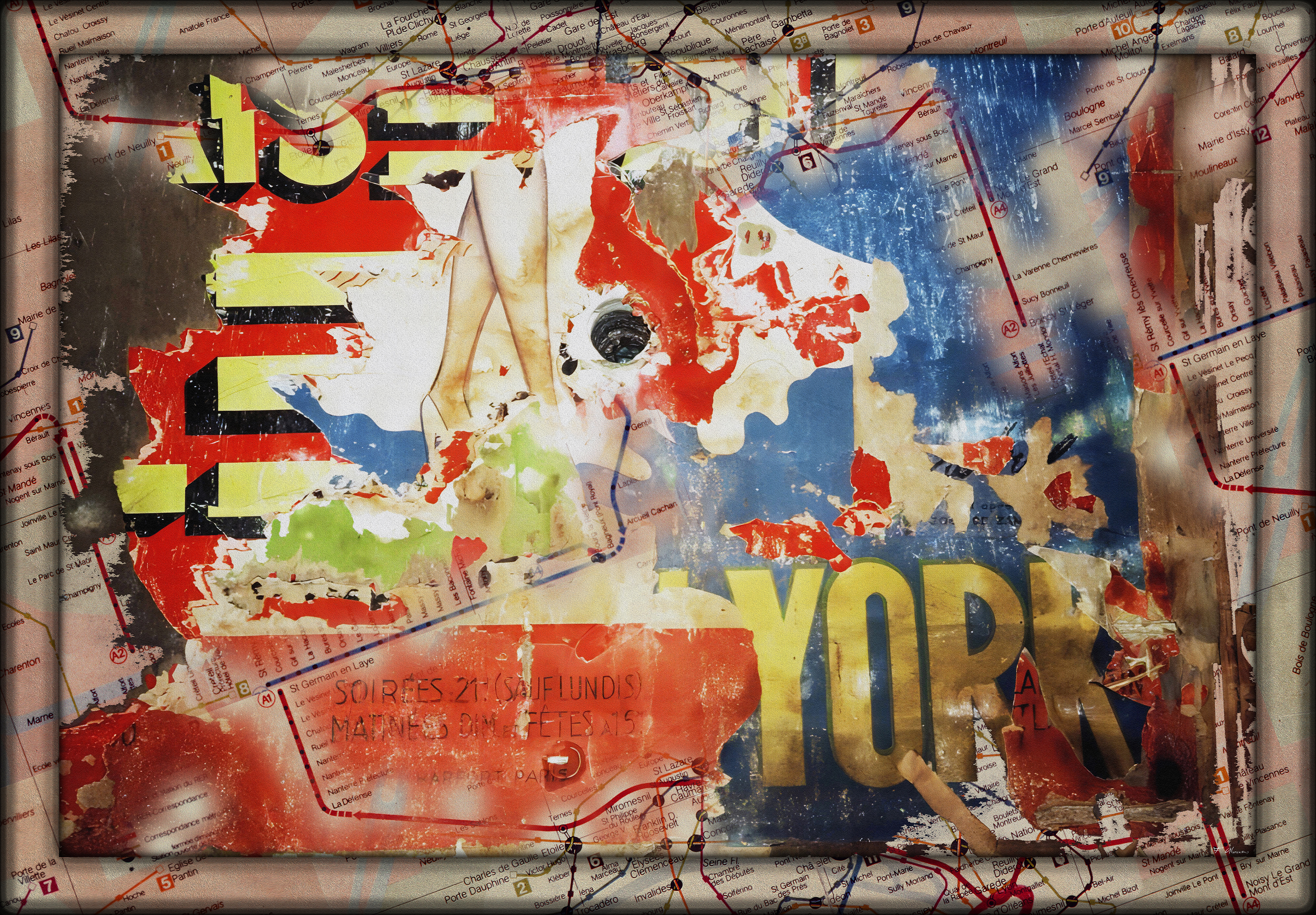
Abrams also had escorted access to clandestine underground art galleries, where artists and cultural figures operated outside the official institutions of the Communist system. These encounters gave him a rare glimpse into Poland’s hidden artistic community and exposed him to the ways artists used underground spaces to preserve creative freedom, exchange ideas, and resist cultural restrictions.
In 1991, Abrams received a private invitation to photograph a station under renovation beneath the former Berlin Wall, documenting another significant underground site at a moment of fundamental historical transformation. Later that year, as the country was beginning to embrace a free-market economy and undergoing dramatic social and economic transformation, he returned to Poland for a solo exhibition at Galerie X, the newly established gallery founded by Zbigniew Makarewicz. The exhibition featured 50 photographs documenting his evolving exploration of underground environments during travels from New York to Moscow, along with three hand-created graphic artworks, thus fulfilling the art project Abrams had been invited to undertake when he first came to Poland in 1989, bringing together the artistic ideas and experiences that had developed during his initial journey.
Abrams recounts – “Having been supported by such heroic individuals and inspired by their valiant efforts to keep free expression alive under such difficult and hazardous circumstances, this experience gave me a new sense of having a mission as an artist, something which was so terribly taken for granted back home. Without money, few resources or goals of fame and fortune, Polish artists were highly respected for this reason and I came to recognize a far larger sense of purpose and values.”
During this second visit, Abrams also met Magdalena Żuk, a gifted pianist who would later become renowned throughout Europe and in Japan. Their meeting added another dimension to Abrams’ growing network of Polish artists and musicians.
When he returned to Poland for the third time in 1996, Żuk had developed into a prolific and accomplished virtuoso pianist. Her encouragement inspired him to pursue a proposal he had been invited to develop for the annual International WRO Media Festival. In 1997, Żuk performed alongside an ensemble of five other classical musicians, a rock trio, and Abrams on guitar in two live multimedia presentations: The first took place at the Wroclaw Music Academy concert hall as part of the International WRO Media Festival. Later that year, the work was presented again at the Centre for Contemporary Art in Warsaw as part of the International Audio Art Festival. For this installation, Abrams was awarded this festival’s Grand Prize two years later.
Staging these productions, however, proved extraordinarily difficult. Poland was a country in transition, and the newly emerging cultural and economic freedoms were accompanied by enormous technical, logistical, and bureaucratic obstacles, much of the government still dominated by former communist officials. The difficulties became so extreme that he eventually stopped performing and exhibiting his work.
Yet by then, Abrams had become deeply invested in Poland. Despite the obstacles, he had established meaningful relationships and remained captivated by the opportunities that existed precisely because Poland was undergoing such profound transformation—opportunities that, in his view, would never have presented themselves elsewhere.
The experience ultimately strengthened rather than diminished his sense of artistic mission. Poland became a place where Abrams could attempt things he might never have dared—or been able—to pursue in the West. The uncertainty, limitations, and rapidly changing environment became part of what attracted him. He was energized by the country’s extraordinary pace of development and by the sense that he was participating in a society being fundamentally remade.
One of his most important accomplishments of this period was his emergence as a self-taught composer and multimedia musician. Although he had no formal musical training appropriate to the complexity of the arrangements he was creating, he taught himself to compose sophisticated musical structures using emerging high-tech tools. Poland’s strong institutional support for classical music, which had persisted through the communist period, created an environment in which his unusual fusion of technology, progressive music, and classical performance could take place. His ability to perform with professional classical musicians therefore represented both a personal breakthrough and an extension of his larger practice of crossing artistic boundaries.
At the same time, Abrams supported himself through a variety of language-related activities, including privately teaching English, recording English-language narrations for the city and for businesses targeting foreign visitors, and correcting poorly translated English materials as the country was opening to the world.
When Poland joined the European Union in 2004, Abrams saw the country’s EU membership as an enormous opportunity to participate in Poland’s continuing transformation.
His entrepreneurial ambitions were also deeply connected to his personal background. Having grown up in Los Angeles surrounded by Mexican cuisine and having a father who designed restaurant kitchens and worked extensively in Mexico City, Abrams had long dreamed of opening an authentic Mexican restaurant in a country where Mexican food was virtually nonexistent. Though the availability of authentic ingredients and flavors was limited, and Abrams found creative ways to offer something genuinely new to the country.
At the same time, changes in Poland’s economic environment created another opportunity. Wine importation tariffs were being dramatically reduced, making it increasingly feasible to bring foreign wines into the country. Because Abrams had previously lived in France and Spain, he had become accustomed to the European culture of enjoying good, inexpensive wine with meals. He had also learned how to identify quality wines that were affordable.
This ambition connected directly back to the original reason he had been invited to Poland by Jerzy Ryba: cultural exchange. Abrams wanted to introduce Polish audiences to things that had been difficult or unavailable during the Cold War. Food, wine, art, film, music, and international cultural experiences could all become part of this educational mission.
The next development was almost serendipitous. At precisely this moment, the first wine bar in Wroclaw, located inside a medieval tower, became available for rent. Abrams recognized the opportunity immediately. The situation became even more extraordinary when he discovered that the building’s new owner was the internationally recognized Polish writer Olga Tokarczuk, destined to become a Nobel Prize Laureate in Literature (2019). When Abrams presented her with his vision for transforming the medieval structure into a center for artistic and cultural activity, she offered him the opportunity to develop it.
The building was the Bear Tower (known as Baszta), a 13th-century historical landmark in the heart of Wrocław. For Abrams, taking over such a significant medieval structure presented a once-in-a-lifetime opportunity: to preserve and restore a piece of Poland’s architectural heritage while giving it a new cultural life. Under his direction, the tower, then renamed “Abrams Tower,” became a meeting place for art, film, music, food, wine, and international cultural exchange. Its transformation reflected Abrams’ broader philosophy that historical spaces could be revitalized rather than simply preserved as monuments.
This is what ultimately kept him in Poland for seven more years.
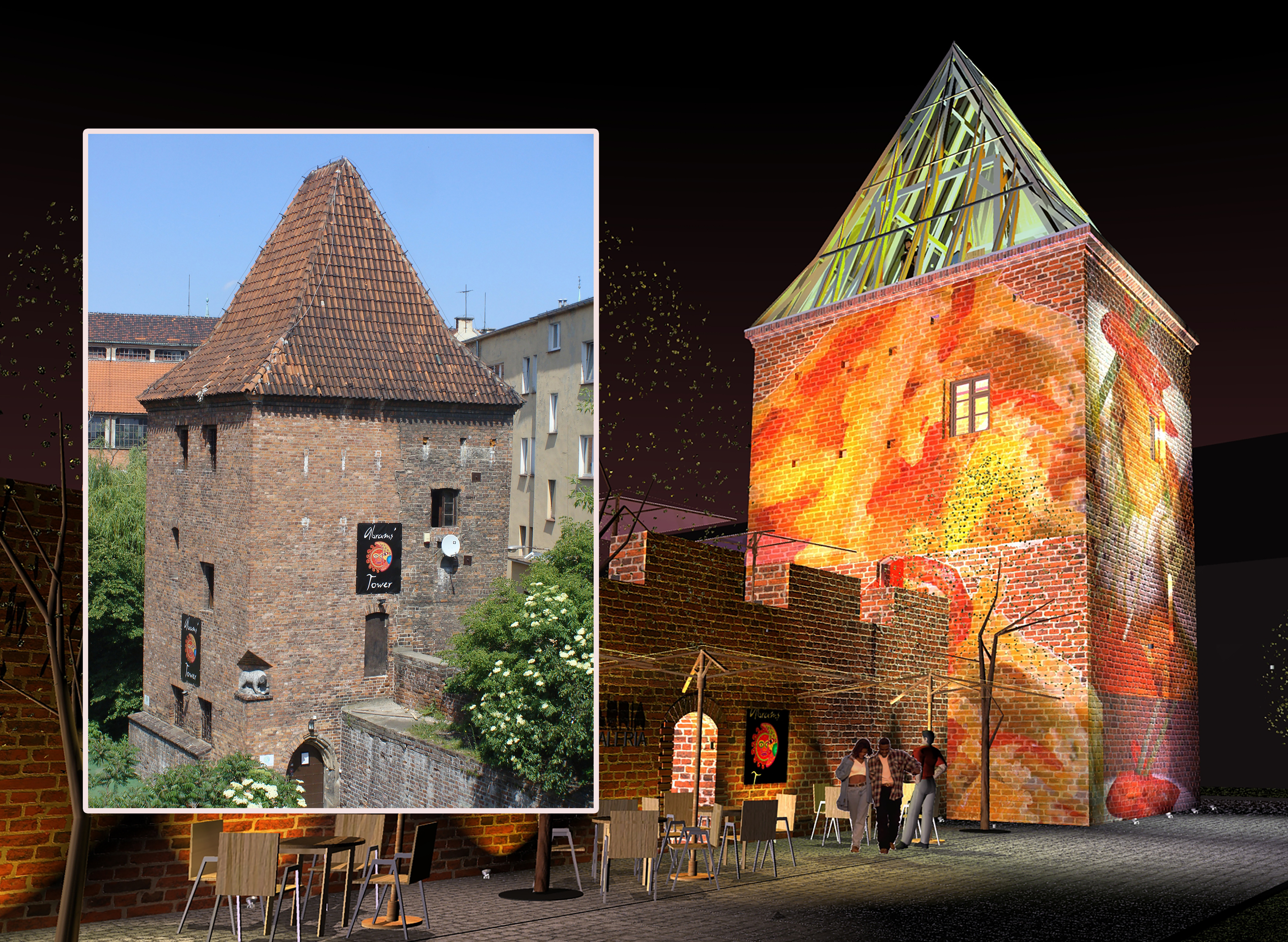
Abrams ultimately left Poland and returned to Los Angeles when the worst hybrid he had long ago envisaged, of communism and capitalism, had taken its toll. However, the profound experience of that period of his life left an indelible mark, resulting in building a contemporary tower back home serving similar artistic and cultural purposes, while having complete freedom of personal expression in his own private art gallery, inspired by courageous artists in Poland, who in a time of totalitarian oppression had created their own in residential properties.
Since then, he has become engaged in taking his multimedia efforts to new dimensions in visual art, video and music and a book he has almost completed about his strange destiny in Poland.